

Governance, Sustainability & Impact
We advise investment managers, corporates, institutions and foundations on the governance, sustainability and impact frameworks that underpin long-term success.
Our advice draws on senior experience in shaping best practice across private markets, including leadership of the BVCA and advisory roles to governments, and on our own research into how the impact of business can be measured holistically and transparently.
Areas of expertise include:
Design of best-practice governance frameworks for funds, vehicles and investment platforms
Investment committee design, terms of reference and independent IC membership
Sustainability and impact strategy, policy and reporting
Establishment of impact and sustainability-focused vehicles
Financing strategies and blended finance
Impact measurement and management
Philanthropic giving strategies and programme due diligence
A proliferation of methodologies now exist for assessing the impact of business, yet most remain resource-intensive, subjective, narrowly focused and difficult to compare.
In a working paper published with LSE Enterprise, our CEO Mark Florman and Dr Robyn Klingler-Vidra of King’s College London evaluated 20 leading approaches, including SROI, GRI, B Lab’s GIIRS and the UN PRI, and proposed a new framework: the External Rate of Return (ERR).
The External Rate of Return
A Broader Definition of Impact
The ERR starts from the premise that impact should be measured holistically, regardless of whether it was the intention of the business.
Existing methods tend to focus on social enterprises and ESG outcomes, overlooking the economic contribution of business activity, such as employment, investment and the development of suppliers and local economies.
The ERR captures economic, social and environmental consequences, positive and negative, for all types of business.
Five Areas of Impact
The framework assesses impact across five dimensions:
Company: the business’s own operations, workforce, governance and investment
Suppliers: its contribution to, and standards within, its supply chain
Customers: the value and outcomes delivered to the people it serves
Society: its wider economic and social contribution to communities
Environment: its environmental footprint and resource use
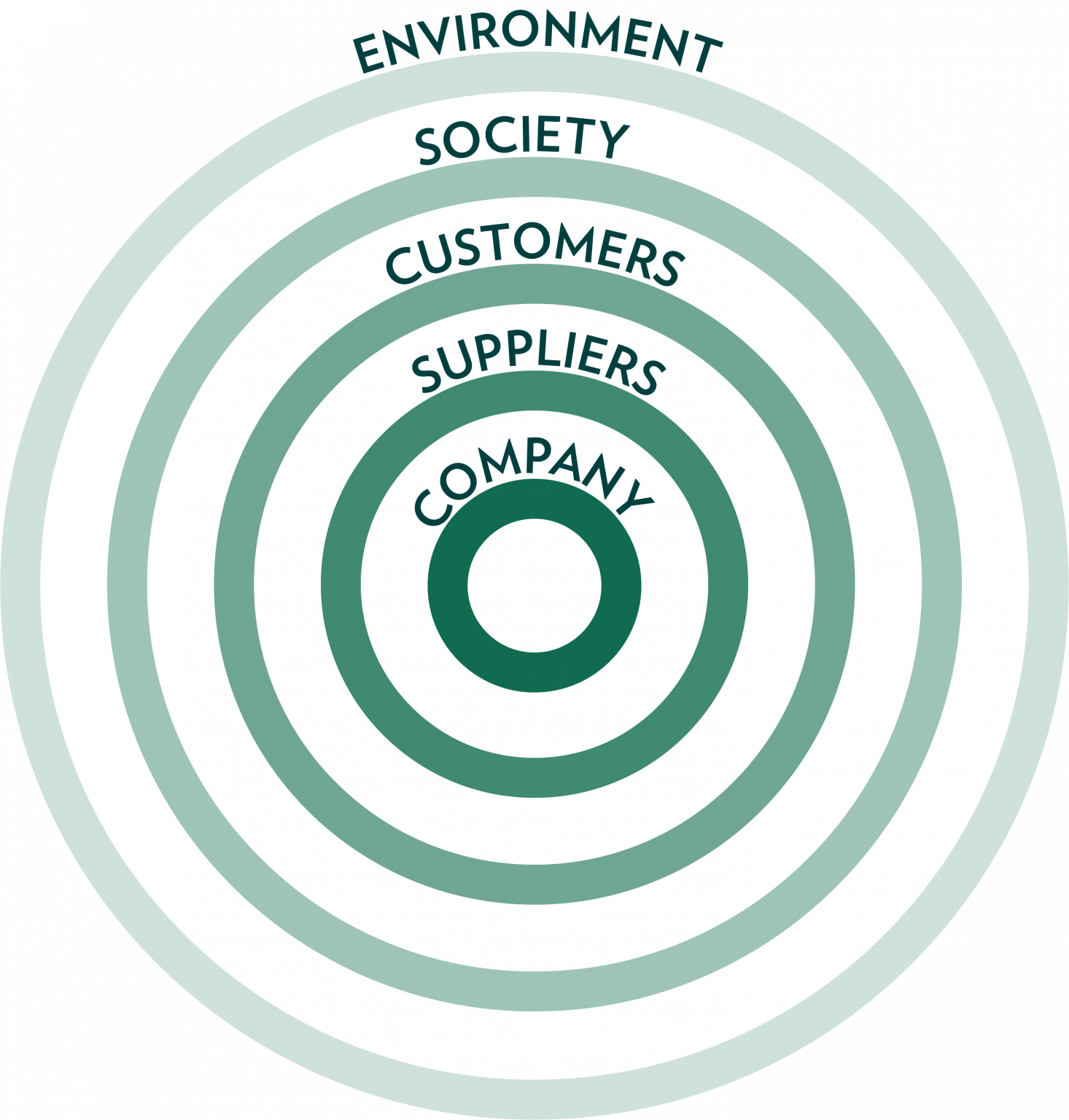
The ERR framework can be applied by investors, companies and institutions at different stages of the investment process:
Investors can use it to assess the full economic, social and environmental contribution of a company or portfolio, and to compare impact consistently across sectors, geographies and ownership structures.
Companies can use it to articulate how they do business and the wider value they create, beyond what conventional ESG reporting captures.
Decision-makers can apply it both before an investment, to evaluate its likely impact, and afterwards, to assess what was achieved.