Private Markets Investments
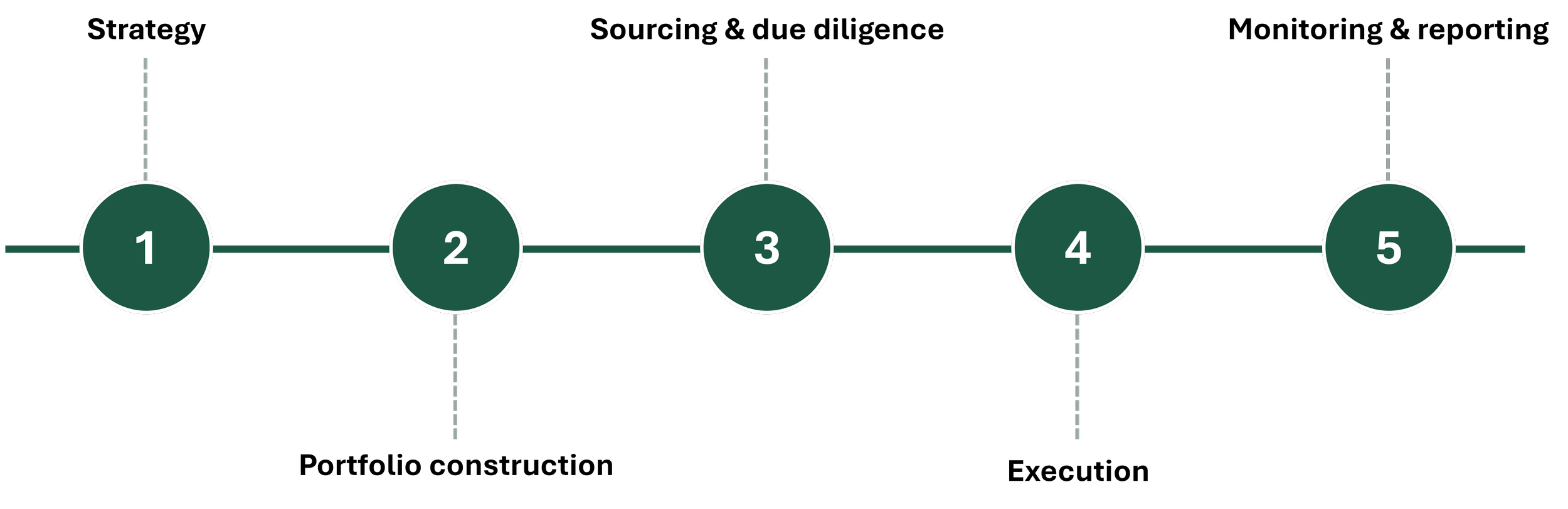
We design and build private markets investment programmes for families, foundations, institutions and wealth managers, tailored to each client’s objectives, liquidity needs and governance.
Programmes are built through fund commitments across North America, Europe and Asia, complemented by co-investments, secondaries and, where appropriate, evergreen structures, drawing on our long-standing relationships with GPs worldwide.
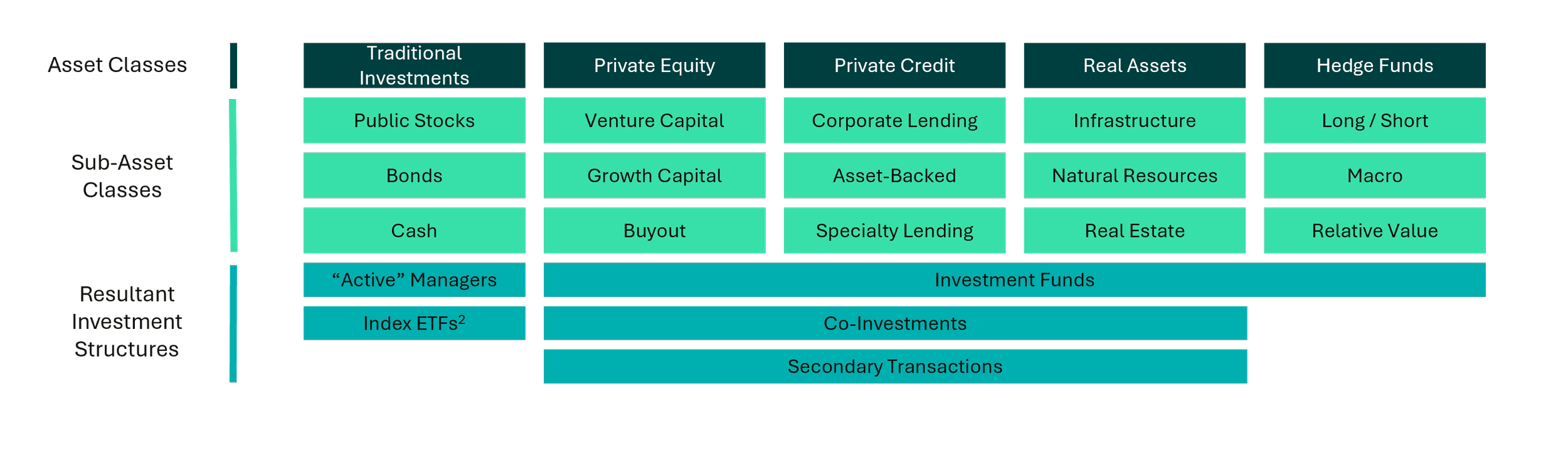
Private markets are investments in companies that are not listed on listed exchanges, typically through funds managed by a general partner or sponsor over a ten to twelve year life. Capital is drawn down as investments are made and returned as companies are sold, with the manager taking an active ownership role in between. The main asset classes are private equity, private credit, real estate, infrastructure, and natural resources. Within private equity, types include venture capital, growth equity, and buyouts, each with different risk, return and liquidity characteristics.
Generally, private markets give investors access to a wider opportunity set, with the potential for higher returns and diversification beyond traditional stocks and bonds.
What are Private Markets
The Case for Private Markets

Access to Growth: Companies are staying private for longer, and many never list at all. Private equity provides access to companies and long-term growth themes not available through public markets.

Active Ownership: Managers work directly with portfolio companies on strategy, operations and governance, giving them levers that public market investors do not have.

Illiquidity Premium: Investors with a long-term horizon and stable capital base are well placed to capture the return premium typically associated with illiquid investments.

Diversification: Exposure to a different set of companies and value drivers, built up gradually across vintage years.
Private markets require a long-term commitment of capital, cash flows need careful planning, and returns vary significantly between managers. This makes portfolio construction, liquidity planning and manager selection central to a successful programme.
Considerations